How to Tell If Your Mechanic Is Recommending Necessary Repairs or Upselling You
Stepping onto the service drive of an auto repair facility often triggers a distinct form of anxiety. You drop your vehicle off for a simple routine oil change, and an hour later the service advisor calls with a laundry list of recommended repairs totaling thousands of dollars. Suddenly, you are forced to make immediate financial decisions about complex mechanical systems you may not fully understand. Is that leaking shock absorber an urgent safety hazard that could cause a highway crash, or is it a minor cosmetic seep that can wait another six months?
The automotive repair industry relies heavily on consumer trust, yet the line between legitimate preventative maintenance and aggressive service drive upselling is frequently blurred. Modern vehicles are complex machines, and components naturally wear out over time. However, distinguishing between critical safety fixes, smart long-term maintenance, and unnecessary shop profit-builders is essential for every vehicle owner.
Protecting your wallet does not mean ignoring vital vehicle upkeep. By understanding how repair shops evaluate wear, learning to request clear visual evidence, and asking the right technical questions, you can navigate repair recommendations with confidence. This comprehensive guide provides a practical framework to evaluate service quotes, verify component failure, and ensure you only pay for repairs your vehicle genuinely needs.
1. Understanding Diagnostic Estimates and Red-Tier Urgent Safety Hazards
When a service advisor presents a repair estimate, it often looks like an intimidating invoice full of technical jargon and urgency. To evaluate this list objectively, you must understand how professional repair facilities categorize vehicle defects using tiered triage systems.
Red-Tier items represent immediate safety hazards where components have suffered complete structural or mechanical failure. Continuing to drive the vehicle presents an immediate danger to occupants or risks secondary catastrophic damage to major systems, such as a snapped serpentine belt, a blown radiator hose, or metal-to-metal brake contact.
A common upselling tactic occurs when a shop blurs the lines between routine maintenance and emergency repairs, presenting minor wear as an impending disaster. To counter this pressure, always ask the service advisor to explicitly categorize each line item on your estimate.
Be alert to fear-based sales phrasing designed to force immediate authorization, such as claims that your car is unsafe to drive home. Taking your car to a trusted auto repair shop for an impartial second opinion is always a smart financial move if you suspect manufactured urgency.
2. Requesting Digital Inspections and Verifying Maintenance Suggestions
Yellow-Tier and Green-Tier items on an inspection report represent upcoming maintenance, early wear, or healthy components that meet factory specifications. Yellow-Tier parts show measurable wear or minor fluid degradation but retain functional integrity. These items do not require instant replacement on the spot; rather, they should be monitored and budgeted for over the next 3,000 to 6,000 miles.
Whenever a technician recommends replacing a part, ask for photographic or video proof. Most modern repair operations utilize a digital vehicle inspection process where technicians take high-resolution photos and video clips of failed components directly on the lift.
If a shop claims your air filter is completely clogged or an underbody boot is torn, but refuses to provide visual evidence or show you the part in the bay, exercise caution before authorizing work. Always request a digital copy of the comprehensive vehicle inspection report complete with date-stamped photos before approving any additions to your original work order.
3. Measuring Brake Pad Wear Thickness to Prevent Premature Replacements
Brake components are among the most common areas for aggressive service drive upselling because they directly touch consumer safety fears. Hearing that your stopping system needs work naturally creates panic, making vehicle owners quick to approve expensive rotor and pad replacements without verifying remaining material thickness.
Friction pads are consumed gradually over time, and verifying their health requires precise measurements rather than vague qualitative descriptors like “getting thin” or “due for replacement.” New brake pads generally measure between 10mm and 12mm in thickness. At 6mm to 7mm, pads have roughly half their operational life remaining and do not require immediate service.
Once pads reach 3mm to 4mm, they are entering a marginal zone where replacement should be scheduled soon. At 2mm or less, friction material is critically thin, and immediate replacement is necessary to prevent metal backing plates from grinding against rotors. If a technician at a local brake shop tells you your pads require immediate replacement, ask for the exact measurement in millimeters for all four wheel positions before agreeing to service.
4. Evaluating Exhaust Systems and Checking Underbody Rust Damage
\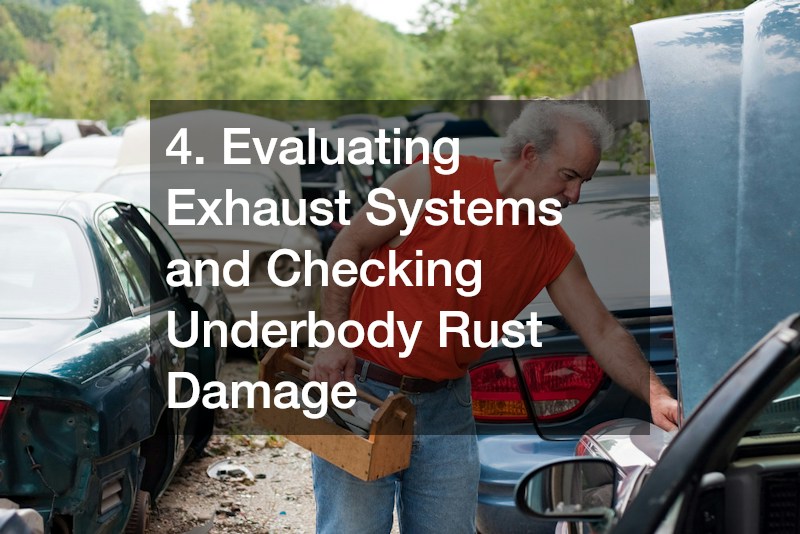
Underbody components, particularly exhaust piping and emissions hardware, are frequent targets for questionable repair quotes. Exhaust systems live in a harsh environment exposed to road salt, moisture, and extreme temperature cycling. As a result, steel exhaust pipes naturally develop heavy orange surface rust within a few years of factory production.
Surface oxidation is completely normal and structurally harmless, yet shops often point to surface rust as evidence of imminent failure. A legitimate exhaust system failure requires an actual physical breach—such as a cracked manifold, a rusted-out muffler seam, or a broken flange—that causes loud ticking noises, cabin fumes, or active exhaust gas leaks.
If a shop recommends full auto exhaust repairs because the pipes look rusted underneath, ask them to perform a smoke test or show you the exact hole where exhaust gas is escaping before agreeing to a costly replacement.
5. Navigating AC Diagnostics and Avoiding Unnecessary System Overhauls
Vehicle heating, ventilation, and air conditioning systems are sophisticated networks containing pumps, heat exchangers, high-pressure lines, and sensitive electronic sensors. Because most vehicle owners do not understand closed-loop refrigeration, climate control problems are prime ground for inflated repair quotes.
When your dashboard air vents stop blowing cold air during summer, the underlying issue is often relatively minor—such as a blown fuse, a sticking blend door actuator, or a tiny slow leak in a service valve. However, disreputable facilities routinely recommend complete compressor overhauls or total system flushes as an automatic first response.
A legitimate car ac repair diagnostic process follows a logical sequence:
-
Verifying the cabin air filter is clean and the blower fan operates properly.
-
Attaching high and low side pressure gauges to verify baseline refrigerant levels and compressor pumping capacity.
-
Applying electronic leak detectors or injecting ultraviolet dye into the system to pinpoint escaping refrigerant.
-
Verifying compressor clutch relays, ambient temperature sensors, and pressure safety switches.
If a shop recommends replacing major components without performing a UV leak dye test or pressure check first, they are throwing parts at your vehicle at your expense.
6. Cross-Checking Factory Owner Manuals Against Service Bundle Pattern Upsells
Another area where upselling thrives is pattern service bundling—where a shop insists that performing one task automatically requires four additional maintenance services. For example, if your vehicle requires a simple radiator hose replacement, a shop might push for an engine flush, a transmission fluid exchange, a differential oil swap, and a fuel injector cleaning service simultaneously.
While grouping labor logically can save money in certain scenarios, maintenance flushes should strictly follow your vehicle manufacturer’s factory maintenance schedule outlined in your owner’s manual. Automobile manufacturers spend millions of engineering hours establishing precise mileage intervals for fluid changes.
If a service advisor claims a fluid change is urgent, pull out your owner’s manual. If your manual specifies transmission fluid service at 60,000 miles and your vehicle currently has 35,000 miles, politely decline the service. Relying on reputable auto repair services means following engineering guidelines rather than arbitrary shop profit quotas.
7. Differentiating Cosmetic Wheel Scuffs from True Structural Rim Failure
The rolling stock of your vehicle bears the entire weight of the automobile while absorbing high-speed impacts from potholes and road debris. Because these parts are visible and accessible, service drives frequently attempt to convert minor cosmetic blemishes into expensive structural or ride-quality upsells.
A common area of confusion involves alloy wheel damage. Hitting a curb can leave unsightly scrapes along the outer edge of an aluminum wheel, commonly referred to as “curb rash.” While curb rash is visually annoying, it is strictly cosmetic and does not compromise structural safety. True structural wheel failure involves either a radial bend that creates an unbalanceable high-speed floorboard vibration, or a visible crack penetrating the metal barrel that causes active air loss.
If a shop tells you a wheel must be scrapped because of surface scratches, seek specialized rim and wheel repairs instead. Professional wheel restoration facilities can safely weld, lathe, and refinish scraped alloy wheels for a fraction of the cost of buying a new factory replacement.
8. Inspecting Tire Tread Depth and Diagnosing High-Speed Suspension Vibrations
Tire replacement quotes also require careful verification. Tire tread depth is measured in thirty-seconds of an inch. New tires typically feature 10/32″ to 12/32″ of tread depth. Legally and practically, a tire is considered worn out at 2/32″, which is where built-in rubber wear bars sit flush with the tread blocks. If your tires measure 5/32″, they possess roughly 40% of their usable tread life, making immediate replacement an unnecessary expense.
Furthermore, beware of aggressive pushes for expensive custom wheels and tires or non-factory suspension modifications when your car exhibits a simple vibration. High-speed wheel shaking is almost always resolved by straightforward dynamic balancing or a basic four-wheel alignment. Always insist on trying lower-cost diagnostic balancing before agreeing to replace expensive rolling hardware.
9. Managing Towing Services and Emergency Collision Repairs
Experiencing a major mechanical breakdown or a traffic collision puts vehicle owners in an exceptionally vulnerable emotional state. When your car is disabled on the side of a busy highway, logic is easily overridden by stress, making emergency scenarios fertile ground for predatory pricing, storage fee traps, and unnecessary teardown authorizations.
If your vehicle suffers an accident or breakdown, keep these critical safety steps in mind:
-
Never allow an unsolicited driver to tow your vehicle to an unspecified yard; direct them explicitly to your home or a pre-vetted repair facility.
-
Confirm the hook fee, per-mile rate, and storage fees on a signed towing slip before the vehicle is lifted.
-
Never sign a blanket authorization permitting an unfamiliar facility to tear down your engine or body panels until an insurance adjuster or trusted master technician inspects the damage.
Utilizing verified towing services affiliated with your insurance carrier or roadside motor club guarantees fair flat rates. If an estimate from an unfamiliar collision facility feels inflated following an accident, you have full legal authority to request transport to independent auto collision shops that prioritize transparent line-item estimates.
10. Building Relationships with Certified Technicians and Seeking Second Opinions

The most effective protection against repair shop upselling is building a long-term relationship with a qualified, highly transparent independent repair facility. When a shop knows you as a regular client who maintains their vehicle systematically, the incentive for short-term service drive upselling disappears in favor of earning your long-term loyalty.
When vetting a new repair facility, look for key markers of professional excellence:
-
Automotive Service Excellence (ASE) certified technicians on staff.
-
Clearly posted hourly labor rates and standard labor guide pricing.
-
Written nationwide parts and labor warranties covering at least 24 months or 24,000 miles.
-
Clean, organized service bays and professional client communication.
When evaluating a new shop, start small with a routine oil change or tire rotation to observe how the service advisor communicates. Never hesitate to seek a second opinion if a repair quote seems unreasonably high or mechanically suspect; a confident, honest repair facility will never object to you verifying an estimate elsewhere.
Navigating automotive care does not require a degree in mechanical engineering. By asking for visual evidence, checking factory maintenance schedules, and understanding wear limits, you can easily protect your wallet while keeping your vehicle safe on the road.
Remember these core rules whenever you review a repair quote:
-
Always demand exact measurements in millimeters for brakes and fractions of an inch for tire tread rather than accepting vague descriptions.
-
Verify fluid service recommendations directly against your owner’s manual before authorizing maintenance flushes.
-
Require visual proof, smoke tests, or dye checks before approving major repairs for air conditioning or exhaust systems.
-
Separate cosmetic surface damage on wheels and body panels from actual structural fatigue or safety hazards.
Empowering yourself with technical knowledge transforms auto maintenance from a stressful guessing game into an organized, transparent process. By staying informed, verifying wear claims, and partnering with certified, transparent technicians, you ensure your vehicle stays safe, reliable, and economical for many years to come.