How to Check for Suspension Problems
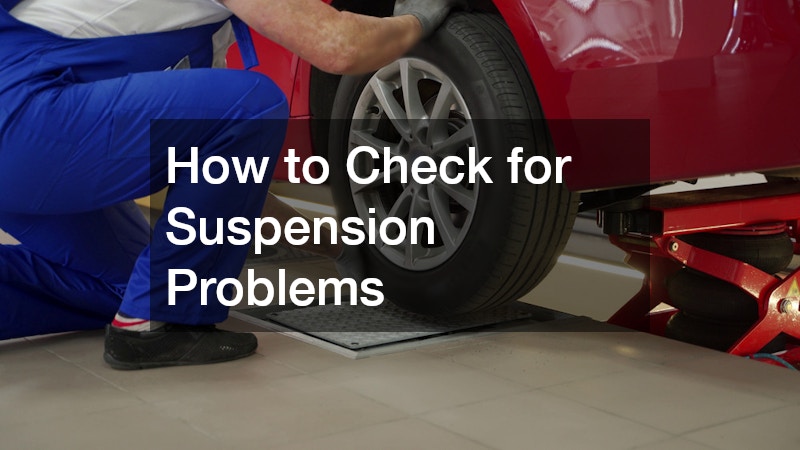
A vehicle’s suspension system keeps the tires in contact with the road, absorbs impacts, and supports stable steering and braking. Because suspension components often wear gradually, drivers may not immediately notice that handling has changed. Several basic checks can reveal warning signs, although a professional inspection is needed to confirm whether suspension repairs are necessary.
Pay Attention to Ride Quality
A rougher ride is one of the clearest signs of suspension trouble. If the vehicle bounces excessively over small bumps or continues moving after crossing uneven pavement, the shocks or struts may no longer be controlling body movement effectively.
A healthy suspension should absorb impacts and allow the vehicle to settle quickly.
Listen for clunking, knocking, squeaking, or rattling. These sounds may be connected to worn bushings, loose mounts, damaged links, ball joints, or control arms. Note whether the noise occurs during turns, braking, or travel over bumps. Those details can help a technician identify which suspension repairs should be considered.
Check How the Vehicle Sits
Park on a flat surface and look at the vehicle from the front, rear, and both sides. The body should appear reasonably level. One corner sitting lower than the others may indicate a weak spring, damaged strut, or another part that is no longer supporting the vehicle properly.
Confirm that the tires are correctly inflated and remove unusually heavy cargo before drawing conclusions. Tire pressure, uneven ground, and unevenly distributed weight can make a vehicle appear tilted. If it still leans, arrange an inspection rather than attempting to adjust suspension parts yourself.
Try a Careful Bounce Test
A basic bounce test may expose worn shocks or struts. With the vehicle parked and the engine off, press down firmly on one corner of the body and release it. The vehicle should rise and settle with little continued movement. Repeated bouncing may mean the damping components are worn.
This is only a preliminary test and may not work well on every vehicle. Avoid pressing on fragile panels, and use a solid area identified in the owner’s manual. Visible fluid leaking from a shock or strut is another reason to seek suspension repairs.
Inspect the Tires
Uneven tire wear may reveal alignment or suspension problems. Examine each tread for cupping, scalloped patches, excessive wear on one edge, or major differences between tires. Worn shocks can allow a tire to bounce against the road, while damaged suspension components may prevent the wheel from maintaining the correct angle.
Uneven wear does not automatically prove the suspension is responsible. Incorrect inflation, delayed rotation, wheel imbalance, and improper alignment can cause similar patterns. A complete evaluation should examine the tires, wheels, alignment angles, and related parts before suspension repairs are recommended.
Notice Steering and Braking Changes
Suspension problems can affect how a vehicle responds during turns and stops. Warning signs include excessive body roll, wandering, loose steering, or a front end that dives sharply during braking. Pulling to one side may involve a tire, brake, alignment, steering, or suspension issue.
Do not test these symptoms through sudden steering or hard braking on public roads. Instead, observe the vehicle during normal driving. Severe pulling, grinding, a wheel that appears out of position, or a sudden loss of control requires immediate attention and may mean the vehicle is unsafe to drive.
Look for Visible Damage
Without crawling beneath an unsupported vehicle, inspect parts that are safely visible around the wheels. Look for broken springs, torn rubber bushings, leaking shocks, bent pieces, loose components, or fresh contact marks. After hitting a curb or pothole, also check for tire damage or a wheel that appears tilted.
Never work beneath a vehicle supported only by a jack. Suspension parts can be under considerable tension, and improper disassembly can cause serious injury. A qualified technician can determine whether suspension repairs involve one component or several related parts.
Schedule a Professional Inspection
Bring notes about noises, recent impacts, steering changes, and the conditions that trigger each symptom. A technician can inspect the shocks, struts, springs, joints, bushings, links, mounts, tires, and alignment before explaining the findings.
Suspension concerns affect safety as well as comfort. Regular observation, tire checks, and prompt testing can catch wear before it becomes severe. When a vehicle no longer rides, steers, or sits normally, an inspection can clarify which suspension repairs are needed and whether the vehicle remains safe to operate.